
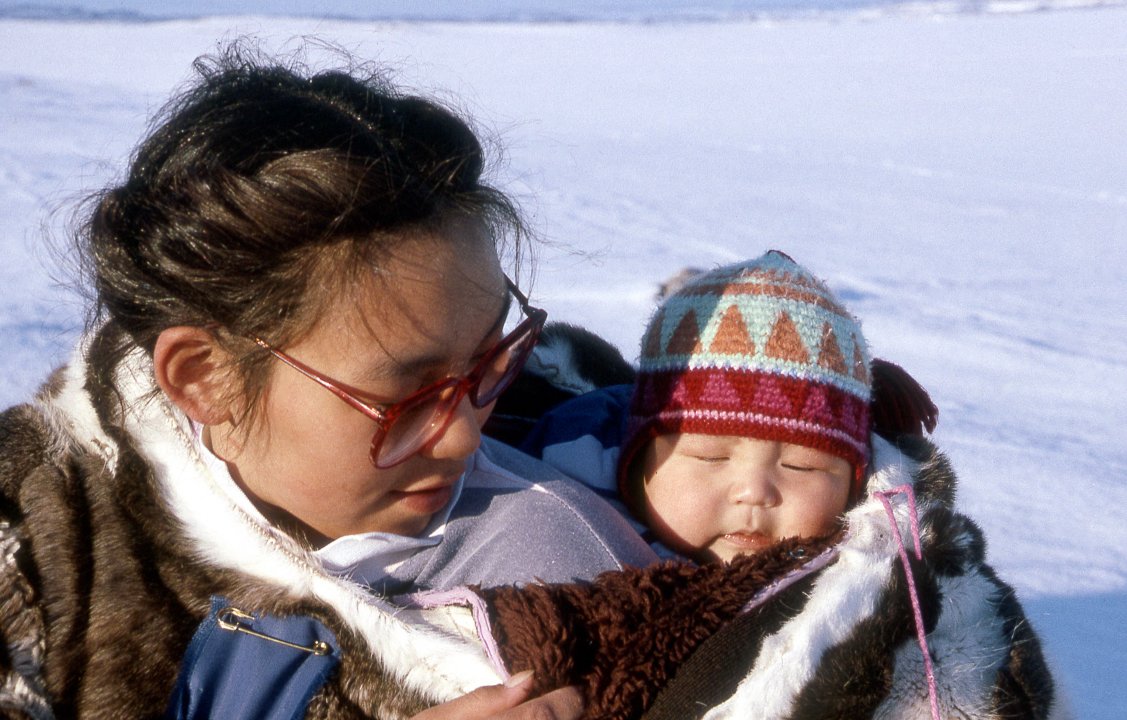
For centuries, Inuit women have given birth in some of the harshest environments on Earth, where temperatures drop far below freezing, and resources are limited. Despite these challenges, childbirth in Inuit culture has historically been a communal and deeply spiritual event, shaped by traditions passed down through generations. The experience of giving birth among the Inuit reflects resilience, adaptation, and a deep connection to family and nature.
Traditional Inuit Birthing Practices
Inuit childbirth traditionally took place in the home or within a small community setting, attended by experienced midwives and female family members. These midwives were often elder women who had accumulated vast knowledge through years of experience and were highly respected for their ability to safely guide both mother and child through labor.
Birthing positions varied, with many women choosing to kneel or squat to allow gravity to assist in the process. Some communities used makeshift birth stools, and others had women give birth on caribou skins for warmth and comfort. Herbs, animal fat, and warm water were sometimes used for pain relief and to ease contractions.
Spiritual and Cultural Beliefs
Birth was seen as a sacred event in Inuit culture, and various customs were followed to ensure the health of the newborn and the mother. Names held deep significance, and newborns were often named after deceased relatives or community members, strengthening the bond between past and future generations.
Elders played a crucial role in welcoming the newborn, sometimes performing rituals to bless and protect the child. In some Inuit communities, it was believed that a newborn carried the spirit of their namesake, embodying their traits and continuing their legacy.
The Impact of Colonization and Medicalization
With colonization and the expansion of Western medical practices in the 20th century, traditional Inuit birthing customs faced disruption. By the mid-1900s, Canadian government policies required Inuit women to travel thousands of kilometers to urban hospitals to give birth, separating them from their families and cultural traditions. This shift not only created emotional distress but also led to a loss of traditional knowledge as fewer births occurred within Inuit communities.
The Return to Community-Based Births
In recent years, there has been a movement to reclaim Inuit birthing traditions and bring childbirth back to the communities. Midwifery programs and birth centers have been established in parts of the Arctic, such as the Inuulitsivik Health Centre in Nunavik, allowing women to give birth closer to home with culturally competent care. These efforts not only promote safer childbirth experiences but also help revitalize Inuit cultural practices and strengthen family bonds.
Conclusion
The journey of childbirth among Inuit women is a testament to the resilience of their culture. While modernization has changed some aspects of Inuit birthing traditions, the deep spiritual and communal significance of childbirth remains. By restoring traditional midwifery practices and supporting local birthing centers, Inuit communities are reclaiming an essential part of their heritage—one birth at a time.
 Women's voices